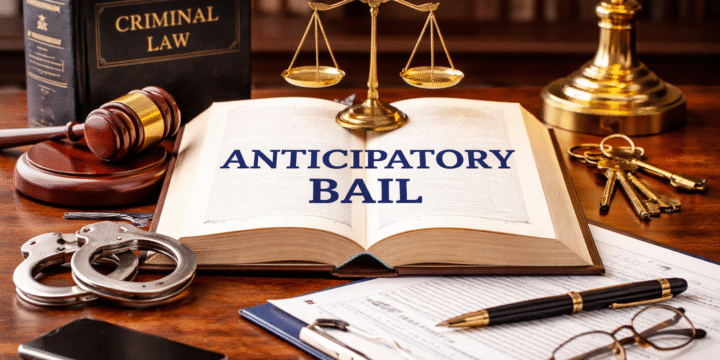
Anticipatory Bail After FIR: Legal Timeline and Expert Guidance

Anticipatory Bail After FIR: Legal Timeline and Expert Guidance

Blogs
  Anticipatory bail is a crucial legal remedy available to individuals who apprehend arrest in a criminal case. In India, this protection becomes especially relevant after the registration of a First Information Report (FIR). Governed by Section 438 of the Code of Criminal Procedure (CrPC), anticipatory bail ensures that a person can seek protection from arrest even before being taken into custody. Understanding the legal timeline and procedural aspects after an FIR is essential to safeguard one’s rights effectively. Understanding Anticipatory Bail After FIR Once an FIR is registered, it indicates that the police have formally recorded allegations of a cognizable offence. At this stage, the accused may fear immediate arrest. Anticipatory bail allows such individuals to approach the court seeking protection against arrest. Contrary to common misconceptions, the filing…
Read More
Dowry Death Cases: Legal Provisions, Punishments, and Victim Protection

Dowry Death Cases: Legal Provisions, Punishments, and Victim Protection

Blogs
Dowry Death Cases: Legal Provisions, Punishments, and Victim Protection” Dowry-related crimes remain a serious concern in India despite strict laws and increasing awareness. Among these, dowry death is one of the most tragic and severe offenses, reflecting the darker side of societal practices. The Indian legal system has established stringent provisions to prevent such crimes, punish offenders, and protect victims and their families. Understanding these legal safeguards is essential for promoting justice and awareness. What is a Dowry Death? Dowry death refers to the death of a married woman caused by burns, bodily injury, or under suspicious circumstances within a certain period of marriage, where it is shown that she was subjected to cruelty or harassment by her husband or his relatives in connection with dowry demands. Under Indian law,…
Read More
Anticipatory Bail in Dowry & 498A Cases: Legal Strategy Guide

Anticipatory Bail in Dowry & 498A Cases: Legal Strategy Guide

Blogs
In India, matrimonial disputes sometimes escalate into criminal proceedings, especially under laws related to dowry harassment and cruelty. One of the most commonly invoked provisions is Section 498A of the Indian Penal Code, which deals with cruelty by a husband or his relatives towards a married woman. While this law is crucial for protecting women, it is also known for instances of misuse, making anticipatory bail an important legal remedy for the accused. This guide explains anticipatory bail in dowry and 498A cases, the legal framework, process, and strategies to protect your rights effectively. What is Anticipatory Bail? Anticipatory bail is a legal provision that allows a person to seek bail before being arrested. It is governed by Section 438 of the Code of Criminal Procedure. This provision ensures that…
Read More
What Is Domestic Violence? A Complete Guide Backed by Experts

What Is Domestic Violence? A Complete Guide Backed by Experts

Blogs
What Is Domestic Violence? Domestic violence is a serious and often misunderstood issue that affects millions of people across the world. It is not limited to physical harm—rather, it includes a pattern of behaviors used by one person to gain or maintain control over another in an intimate or family relationship. Understanding domestic violence is the first step toward prevention, support, and recovery. Understanding Domestic Violence Domestic violence, also known as domestic abuse, can occur in various relationships, including marriages, live-in partnerships, and even within families. It is defined as any form of abuse—physical, emotional, psychological, sexual, or financial—that creates fear, harm, or intimidation. Experts emphasize that domestic violence is about power and control, not just anger or conflict. It often develops gradually, starting with subtle behaviors and escalating over…
Read More
Bail in Delhi: Expert Legal Guide to Securing Quick and Lawful Release

Bail in Delhi: Expert Legal Guide to Securing Quick and Lawful Release

Blogs
Facing arrest or having a loved one in custody can be overwhelming. Understanding the bail process in Delhi is crucial for protecting personal liberty and ensuring a lawful release. Bail is a fundamental right in many cases under Indian criminal law, but the procedure, strategy, and documentation must be handled carefully. This expert guide explains the bail system in Delhi courts, eligibility, procedure, and practical tips to improve approval chances—following strong EEAT principles (Experience, Expertise, Authoritativeness, Trustworthiness). What is Bail? Bail is the legal mechanism that allows an accused person to be released from custody while ensuring their presence during investigation or trial. Instead of remaining in jail, the accused provides a bail bond or surety guaranteeing compliance with court conditions. In India, bail provisions primarily fall under the Code…
Read More
Bail Demystified: Rights, Process, and Legal Insights

Bail Demystified: Rights, Process, and Legal Insights

Blogs
Bail is one of the most crucial aspects of the criminal justice system. It acts as a bridge between the right to liberty and the interest of justice, ensuring that an accused person does not remain in custody unnecessarily while their trial is still pending. What is Bail? Bail is a legal process that allows an accused to be released from custody, with or without conditions, upon providing assurance to the court that they will appear for future proceedings. It is not an acquittal but a temporary release until the trial is concluded. Rights Associated with Bail Every individual has the fundamental right to seek bail, as personal liberty is protected under Article 21 of the Indian Constitution. Depending on the gravity of the offence, courts may grant: Regular Bail…
Read More
Beyond the Shadows: Strategic Legal Defense in NDPS Cases

Beyond the Shadows: Strategic Legal Defense in NDPS Cases

Blogs, Uncategorized
The Narcotic Drugs and Psychotropic Substances (NDPS) Act is one of India’s most stringent laws, aimed at curbing the manufacture, sale, possession, and consumption of prohibited substances. While it plays a critical role in combating drug trafficking, its strict provisions also mean that individuals accused under this law face severe penalties—even for minor infractions—unless defended with precision and expertise. Understanding the Stakes Charges under the NDPS Act can lead to lengthy imprisonment, hefty fines, and long-term social and professional consequences. The law’s stringent bail provisions and reversal of the burden of proof in certain cases make it even more challenging for the accused to secure relief without strong legal representation. Strategic Defense Approach Scrutinizing Procedural ComplianceEvery NDPS case hinges on whether law enforcement followed due process. From the legality of…
Read More
“Law Against Lawlessness: Safeguarding Society Through Criminal Codes”

“Law Against Lawlessness: Safeguarding Society Through Criminal Codes”

Blogs
In any civilized society, the rule of law is the foundation upon which peace, order, and justice are built. Criminal law serves as the legal barrier between chaos and civility, ensuring that actions threatening life, liberty, and property are met with accountability. It is not just a set of rules—it is society’s commitment to justice, fairness, and deterrence. 🧭 What Is Criminal Law? Criminal law defines offenses against the state or public order, prescribes punishments, and establishes procedures for investigation, trial, and sentencing. Its main objective is to deter criminal behavior, rehabilitate offenders, and deliver justice to victims. Unlike civil disputes, criminal cases involve actions considered so harmful that they require the state to intervene and prosecute the offender on behalf of society. 📜 Key Criminal Laws in India India’s…
Read More
The End of a Chapter, Not the Book: Legal Insights on Divorce

The End of a Chapter, Not the Book: Legal Insights on Divorce

Blogs
Divorce is often seen as a painful conclusion — but in reality, it’s the closing of one chapter and the beginning of another. While the emotional toll is undeniable, understanding the legal process can empower individuals to make informed decisions, protect their rights, and take the first steps toward healing and a fresh start. 🔍 What is Divorce, Legally Speaking? Divorce is the legal dissolution of a marriage by a court or other competent body. It involves not only the end of the marital relationship but also the resolution of associated issues like child custody, alimony, asset division, and parental responsibilities. ⚖️ Key Legal Aspects of Divorce in India 1. Grounds for Divorce Divorce can be filed under various personal laws based on religion (Hindu Marriage Act, Muslim Personal Law,…
Read More